Table of Contents
- New Hampshire Home Selling
- Which Areas in New Hampshire Offer the Best Return on Investment and Are Easiest for Residential Property Development?
- What Home Styles, Sizes, and Features Tend to Sell Fastest in the New Hampshire Market?
- What Should Home Sellers Know About Zoning Laws, Permits, and Regulatory Requirements in New Hampshire?
- Which Towns or Cities in New Hampshire Are Easiest, and Hardest, When It Comes to Navigating Real Estate Regulations?
- What Are the Most Effective Flipping and Resale Strategies for Maximizing Profit in New Hampshire's Housing Market?
- How Should Sellers Price Their Homes to Attract Buyers While Maximizing Value in New Hampshire?
- Which Key Economic, Social, and Regulatory Factors Are Driving Current Trends in New Hampshire's Local Property Markets?
New Hampshire Home Selling

After hitting all-time highs in June 2025, the housing market in New Hampshire continues to climb. As of October 2025, the median sale price in the Granite State was $527,950, a 4.5% increase over the previous year and significantly higher than the national median of around $440,000. New Hampshire's median sale price is higher than neighbors like Vermont ($434,200) and Maine ($427,100), but remains more affordable than Massachusetts ($645,115).
Though seasonal peaks and troughs dictate how long homes in New Hampshire spend on the market, the annual average is around 40-50 days. In some local markets, like Nashua, homes tend to sell significantly faster, typically in under 30 days.
Despite a 15.2% year-over-year increase in the number of homes for sale, New Hampshire remains a seller's market with just 2 months of supply. Construction activity in the state has consistently failed to meet demand, causing a housing shortage and widespread affordability issues. However, in July 2025, Governor Kelly Ayotte signed into law a series of bills aimed at encouraging housing growth and expediting development.
New Hampshire's property taxes add to the expense of owning a home in the Granite State. With an average effective property tax rate of 1.77%, New Hampshire is the fourth most expensive state in terms of property taxes, ranking it higher than Vermont (1.71%), Massachusetts (1.11%), and Maine (1.10%).
Foreclosures in New Hampshire are uncommon, in large part thanks to high home equity. As of October 2025, New Hampshire's foreclosure rate was 1 in every 8,948 housing units. This rate was one of the lowest in the nation, and serves as further evidence of the state's stable, resilient housing market.
Which Areas in New Hampshire Offer the Best Return on Investment and Are Easiest for Residential Property Development?

Housing remains in high demand across New Hampshire, offering investors a chance for attractive returns on real estate investments. The state has a stable economy and a healthy job market, drawing renters seeking convenient living arrangements and helping drive home price appreciation. While several cities and towns in the Granite State offer interesting choices and varying attractions for real estate investment and residential property development, some areas stand out.
The following cities and towns are well positioned to offer potentially higher returns on real estate investment in New Hampshire:
-
Manchester: Manchester is the largest city in the state, boasting a strong job market that attracts new residents seeking multifamily housing. Long-term rental investors here may enjoy stable monthly rents and solid price appreciation.
-
Nashua: With a strong job market and proximity to Manchester, Nashua sees high rental demand and steady property appreciation rates.
-
Portsmouth: The city's recent property appreciation rates make it appealing to long-term investors. In addition, its strong tourism economy offers investors premium rental income due to year-round demand for short-term rental properties.
-
Concord: As the state capital, Concord's housing market benefits from government jobs and stable employment (the unemployment rate is just 2.8%, well below the national average). In addition, its proximity to other major cities, like Manchester and Nashua, makes it a reliable market to invest in rental properties.
-
Durham: This city is home to the University of New Hampshire, which attracts a large student and staff population, creating consistent demand for rental properties. Investors may capitalize on this for short- and long-term rentals and potentially higher returns on investment.
-
Keene: Keene is a college town (Keene State College) with strong rental demand from undergraduates actively seeking shared living arrangements. Investors in rental properties within the town can often capitalize on this year-round rental demand.
-
Dover: Dover's steady growth in industries like tech and healthcare attracts young professionals seeking modern housing. As a result, demand for rentals is on the rise, especially in the city's revitalized downtown areas.
-
Conway: The town provides real estate investors with promising opportunities for short-term rental properties owing to tourism activity, which is its primary economic driver.
-
Hampton: Located along the state's seacoast, Hampton attracts year-round residents and tourists, making it a prime area with strong rental potential.
What Home Styles, Sizes, and Features Tend to Sell Fastest in the New Hampshire Market?
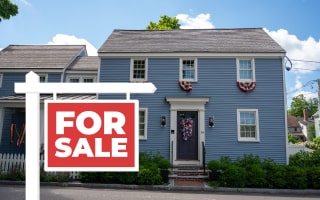
Typically, homes with features like updated bathrooms and kitchens, open-concept floor plans, finished basements, and attached garages tend to sell faster in New Hampshire, as there's consistent demand for such homes. While several other factors may determine how quickly a home sells, the typical property spent a median of 47 days on the market (DOM) in October 2025.
In New Hampshire, homes with one or more of the following characteristics or features are likely to sell faster than others:
-
![]()
Bedrooms: Homes containing 3 or 4 bedrooms with no less than 2 bathrooms are typically preferred by renters and buyers in New Hampshire. They're in constant demand by professionals and young families searching for homes big enough for their children or a home office, without the added expenses that come with larger spaces.
For instance, in Londonderry, most families favor 3- to 4-bedroom, 2-bath homes with access to good schools and commuter routes. Similarly, these homes are popular with Boston commuters in Nashua who want more affordable housing, as well as with families seeking mid-sized homes in Concord.
-
![]()
Size and Lot: In New Hampshire, many buyers want more affordable, move-in-ready homes. These homes are easier to manage, and often include outdoor spaces for recreation that don't drive up property taxes. Typically, homes sized between 1,600-2,200 square feet on 0.25- to 0.5-acre lots fit this description. Such homes are popular and sell faster in places like Bedford, Salem, Hudson, and Exeter.
-
![]()
Style: Some of the fastest-selling home styles in New Hampshire are Cape Cod, Colonial, and ranch styles. These architectural styles balance practicality with tradition. While ranches are more appealing to first-time buyers and downsizers who want accessibility and simplicity, Cape Cods and Colonials are popular because they often meet buyer expectations.
In Dover, for example, smaller Cape Cods and ranches tend to sell quickly because they're considered affordable starter homes. On the other hand, Colonial-style homes are in high demand by families in Keene because they align with local character. Moreover, due to their historic appeal, many home buyers tend to prefer Cape Cod and Colonial home styles in Portsmouth.
-
![]() Modern Upgrades: Homes with modern upgrades tend to sell faster in New Hampshire because most buyers prefer move-in-ready homes that don't require major renovations. Desirable modern upgrades include energy-efficient home systems, open-concept kitchens, updated bathrooms, good curb appeal, functional layouts, and fresh neutral paint.
Modern Upgrades: Homes with modern upgrades tend to sell faster in New Hampshire because most buyers prefer move-in-ready homes that don't require major renovations. Desirable modern upgrades include energy-efficient home systems, open-concept kitchens, updated bathrooms, good curb appeal, functional layouts, and fresh neutral paint.


For instance, properties with modern features are in high demand in Lebanon by many professionals and healthcare workers looking to purchase move-in-ready homes. Similarly, vacation-home buyers in Conway have a preference for homes with newer HVAC systems and modern kitchens, while in Rochester, homes with modern upgrades often stand out among older housing stock, helping them sell quickly.
What Should Home Sellers Know About Zoning Laws, Permits, and Regulatory Requirements in New Hampshire?
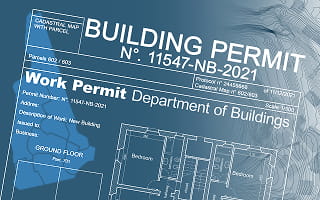
In New Hampshire, home sellers must understand zoning laws, permitting processes, and local regulatory requirements. Zoning is largely driven by local authorities and dictates what can be built, where it can be built, and how a building is used. On the other hand, permits are mainly required before initiating construction, building any structure, or introducing changes to a structure or landscape.
Local zoning ordinances and permits can go a long way in impacting a property's value. Homebuyers often ask for a zoning compliance letter or zoning verification letter to confirm that a property is free of zoning violations and related legal issues. To sell a property fast and maximize return on investment, sellers must clearly understand the prevailing zoning laws and regulatory requirements in their local markets.
-
Areas with strict zoning laws: Places with strict zoning laws in New Hampshire are typically known for enforcing rigid density rules, minimum lot sizes, and controlled subdivision approvals in a bid to manage growth and preserve community character. For instance, strong conservation overlays and rural zoning protections limit subdivision in Amherst, while Bedford typically emphasizes maintaining high-value residential neighborhoods and imposes tight controls on multifamily housing.
Similarly, while conservation overlays and stringent zoning protect wetlands in Windham, they also prevent dense development. Sellers in these areas may experience longer approval times for expansions, subdivisions, or accessory dwelling units (ADUs).
-
Areas with less bureaucratic zoning laws: In New Hampshire, these places include Rochester, where fewer regulatory barriers help encourage residential and commercial growth, and Manchester, where multifamily housing, higher density, and mixed-use developments are allowed. In Berlin, more flexible zoning and less red tape promotes the redevelopment of older housing stock. These areas attract investors because they're more development friendly and often have streamlined permitting processes, along with fewer regulatory barriers.
-
Areas requiring a special permit: In these areas, any uses outside standard zoning, including notable property changes and multifamily development, require special permits obtained through public hearings. The permitting process can slow resale and development, particularly when buyers intend to build or expand.
For example, special permits are required for cluster housing or mixed-use projects in Londonderry, while Zoning Board of Adjustment hearings are usually needed for variances to lot sizes in Pelham. In Derry, Zoning Board approval is required for variances, nonconforming uses, and some expansions.
-
Areas requiring a Certificate of Occupancy (CO) before legal occupation: Homes in larger towns or cities with formal code enforcement in New Hampshire typically require a CO before they can be legally occupied. For instance, all major renovations and new construction in Concord trigger a CO, and in Salem, CO enforcement is tied to inspections and building permits. Similarly, COs are mandatory for new residential and commercial properties in Portsmouth, and following major renovations, changes of use, or changes of occupancy. In some areas where a CO is required, home sellers may not be able to legally transfer ownership of new builds to buyers without a CO.
-
Areas requiring approval of a historic commission: These areas typically protect historic character by ensuring that developers obtain approvals from the local historic commission for certain renovations, especially exterior modifications. In such places, renovations are often costlier and may take longer to obtain permits and project approvals. For instance, changes near Dartmouth's historic core in Hanover are reviewed by the Hanover Planning Board. Similarly, in Portsmouth, Historic District Commission approval is required for material usage and design.
Which Towns or Cities in New Hampshire Are Easiest, and Hardest, When It Comes to Navigating Real Estate Regulations?

While some municipalities in New Hampshire have complex real estate regulations that can complicate renovations, sales, and new development, others have a reputation for clear and straightforward regulations. To maximize property value and avoid legal issues, investors must identify the complexity of each local market's regulatory environment and stay in compliance with all relevant rules.
Each local real estate market's regulatory climate in New Hampshire can determine how easy or difficult it is to develop or invest.
Development-Friendly Areas
These areas typically focus on design standards over restrictive uses and may be more willing to adjust codes for housing development and growth. Furthermore, they often encourage multifamily and mixed-use development, with predictable approval pathways. The following New Hampshire municipalities tend to have development-friendly real estate regulations:
- Nashua: Downtown zoning supports mixed-use and multifamily by right in many districts, making approvals for infill projects easier.
- Salem: In Salem, certain overlay zones are created and designed to accommodate mixed-use growth on a large scale.
- Dover: Zoning here permits mixed use in central areas, with streamlined site plan reviews that encourage downtown reuse.
Moderately Regulated Areas

While these municipalities support growth and housing development in targeted areas, projects outside special districts or overlays may involve interactions with the local planning or zoning board. There's typically flexibility through overlays, but the rules are conventional. Even though real estate developers often face reviews, projects are usually approved quickly, provided they align with certain rules. Examples of areas with moderate regulatory rules in New Hampshire include the following:
- Derry: Allows mixed-use zoning in certain neighborhoods, with some restrictions on design and density.
- Rochester: Multifamily development is permitted in commercial districts, but usually with caps on floor area.
- Concord: While projects require design review and conditional-use approvals, downtown opportunity corridor zones permit higher density.
Highly Restrictive or Bureaucratic Areas
Real estate developers in these areas are typically subjected to approval hearings and face tighter environmental limits impacting housing development. In addition, these places are known for multiple review layers, strong community resistance to density, and large-lot zoning requirements. In New Hampshire, such areas include the following municipalities:
- Hollis: Its rural character rules and strong aquifer protections typically result in large-lot zoning and limited multifamily options.
- Portsmouth: The Historic District Commission's approval is needed for projects located in its downtown, which typically adds design oversight to zoning.
- Durham: Town politics and multiple environmental overlays create increased scrutiny for multifamily housing.
- Hanover: Hanover has strict zoning and resistance to higher density in certain neighborhoods. In addition, obtaining approvals may be slower than in other areas of the state.
Regulatory Climate Factors

An area's regulatory climate includes permitting processes, zoning laws, and review requirements that either ease developers' activities in real estate or make them more difficult. The local regulatory environment plays an essential role in shaping where, how, and what can be developed in a locality, along with how long projects typically take. A municipality's regulatory climate can either smoothen the path for investors and developers or add layers of complexity to land development, home renovations, or house flipping.
The table below indicates the various regulatory climate factors to watch in New Hampshire, how they impact real estate development, and the localities in the state where each factor is prevalent:
Factor |
Impact on Development |
Where It's Found |
|---|---|---|
Zoning Flexibility |
Determines ease of land use |
Nashua, Keene, Concord, Rochester, Salem, Manchester, and Dover |
Historic Preservation Laws |
Adds restrictions |
Dover, Milford, Amherst, Goffstown, Concord, Keene, and Exeter |
Wetlands/Conservation |
Limits buildable land |
Rye, Hampton, Bedford, Hollis, Lee, Stratham, Durham, Merrimack, and Newmarket |
Inclusionary Zoning |
Requires affordable units |
Londonderry, Manchester, Nashua, Keene, Concord, Rochester, and Exeter |
Building Code Enforcement |
Affects cost/speed |
Rochester, Derry, Salem, Bedford, Portsmouth, Manchester, and Concord |
Local Politics/NIMBYism* |
Blocks or delays projects |
Durham, Bedford, Hanover, Windham, Amherst, and Hollis |
*NIMBYism - Not in My Backyard
What Are the Most Effective Flipping and Resale Strategies for Maximizing Profit in New Hampshire's Housing Market?

House flipping in New Hampshire offers investors a potentially lucrative opportunity. However, successfully flipping properties in the state requires investors to locate homes with potential for renovation and resale (usually distressed or outdated ones) at below-market prices. When looking to flip a property in New Hampshire, it's important to consider the condition, location, local market trends, and potential ROI.
The following flipping and resale strategies can help maximize profit in New Hampshire's housing market:
-
![]()
Target Distressed or Foreclosed Homes: This strategy involves buying homes in pre-foreclosure, foreclosure, or poor condition, typically below market prices, then renovating them to resell for profit. Targeting distressed homes works well in older cities and towns in New Hampshire, like Rochester, Manchester, Berlin, Nashua, and Laconia.
-
![]()
Use the 70% Rule [Maximum Offer = (ARV x 70%) - Repair Costs]: The 70% rule works well in New Hampshire's real estate markets with strong resale activity and steady comparables, like Keene, Concord, Salem, and Portsmouth. It ensures investors don't overpay for any property, and enables them to make a healthy profit margin after renovation and resale. Essentially, the strategy suggests that a real estate investor shouldn't pay more than 70% of a property's after-repair value (ARV) after factoring in the estimated repair costs.
-
![]()
Try Wholetailing for Speed: In local markets like Dover, Salem, Nashua, and Manchester, where buyers compete for limited home inventory, wholetailing is one strategy investors should consider adopting. It involves cleaning and making minimal fixes to a property instead of doing a full renovation, then quickly reselling it for maximum profit.
-
![]()
Build Strong Deal Pipelines with Lead Gen: This strategy involves using online ads, bandit signs, and mailers to find off-market deals from motivated sellers. It tends to work best in municipalities such as Nashua, Portsmouth, Manchester, and Concord, where there's a larger population base.
-
![]()
Renovate with Quality, Don't Cut Corners: In competitive and affluent buyer markets like Bedford, Exeter, Portsmouth, and Hanover, investors should consider making high-quality renovations that can attract buyers looking to purchase move-in-ready residential properties.
-
![]()
Follow the BRRRR Method (Buy, Rehab, Rent, Refinance, Repeat): This strategy works well in local housing markets with strong rental demand and stable refinancing options, including Rochester, Manchester, Laconia, and Keene. With the BRRRR method, a flipper can purchase a house and rehabilitate it, rent it out, refinance it to pull cash out, and then repeat the process.
-
![]()
Try Micro-Flipping (Digital Wholesaling): This is a flipping strategy that involves using digital real estate platforms to source residential properties and assign contracts quickly without renovating. It's ideal in competitive markets with high investor activity, such as Salem, Manchester, Dover, and Nashua.
-
![]()
Go Beyond Cosmetic Work (Value-Add Flipping): This strategy is often adopted in municipalities that allow zoning flexibility, such as Rochester, Concord, Dover, Claremont, and Somersworth. It involves making major structural improvements, like rezoning a property from single-family use to multifamily, adding extra bedrooms, or finishing a basement.
-
![]()
Buy at Auction and Off Market: This strategy involves purchasing a deeply discounted property through bank-owned sales, courthouse auctions, or direct-to-owner deals. This strategy may be most effective in areas like Laconia, Berlin, and Manchester, where there's often a consistent flow of distressed properties.
-
![]()
Explore Creative Financing and Seller Financing: This involves a home seller and buyer structuring a sale with seller-held mortgages or lease options instead of bank financing. In New Hampshire, it's often effective in slow-moving housing markets where sellers are more open to unconventional deals, such as Berlin, Keene, Milford, and Franklin.
-
![]()
Invest in Tax Liens or Tax Deeds: With this strategy, investors may acquire residential properties whose owners fail to pay their property taxes. It's best for below-market acquisitions in places like Berlin, Rochester, and Manchester.
-
![]()
Target FHA 203(k) Buyers: This flipping and resale strategy works best in markets with many younger or first-time buyers who rely on the FHA 203(k) loan to finance the purchase and renovation of their homes. In New Hampshire, such markets include Concord, Derry, Nashua, Dover, and Manchester.
-
![]()
Stage and Price Strategically: Investing in professional staging and adopting smart pricing strategies may help maximize property resale values in high-competition, luxury markets, such as Hanover, Bedford, Londonderry, and Portsmouth.


How Should Sellers Price Their Homes to Attract Buyers While Maximizing Value in New Hampshire?

Pricing is an important step in the home-selling process. By setting a competitive price, home sellers are more likely to attract serious buyers and quickly sell listed properties while maximizing profit margins. However, before considering pricing any home in New Hampshire, make sure to assess the local housing market. In particular, consulting a local real estate agent or appraiser to help analyze comps, including active, pending, and recently sold properties within the last 3 months, is highly recommended before setting a price.
The following pricing strategies may help sellers yield the best return on investment in the New Hampshire real estate market:
-
![]() Pricing Just Below Below Market Thresholds: Listing a property slightly below certain thresholds, like $199,900 instead of $200,000, may help capture a wider pool of potential buyers searching for listed homes under a certain cutoff or round number. It's a common strategy in markets like Rochester, where entry-level buyers often gravitate toward listings under their budget caps.
Pricing Just Below Below Market Thresholds: Listing a property slightly below certain thresholds, like $199,900 instead of $200,000, may help capture a wider pool of potential buyers searching for listed homes under a certain cutoff or round number. It's a common strategy in markets like Rochester, where entry-level buyers often gravitate toward listings under their budget caps.
The strategy is also effective in places like Nashua, where buyers hunt for available homes in set price brackets, and Concord, where mid-market residential properties tend to move faster with small adjustments to market thresholds.
-
![]() Charm Pricing (Psychological Pricing): This pricing strategy is best adopted in housing markets with many first-time buyers. It involves setting prices that end with numbers like 95 or 99 (for instance, $399,955) to portray a lower price to potential buyers. This strategy may be most effective in areas like Keene, where there are many young buyers looking for affordable housing, and in Laconia, where second-home buyers typically respond well to listings that appear like a good deal. Furthermore, sellers can use charm pricing in most budget-conscious markets, such as Claremont.
Charm Pricing (Psychological Pricing): This pricing strategy is best adopted in housing markets with many first-time buyers. It involves setting prices that end with numbers like 95 or 99 (for instance, $399,955) to portray a lower price to potential buyers. This strategy may be most effective in areas like Keene, where there are many young buyers looking for affordable housing, and in Laconia, where second-home buyers typically respond well to listings that appear like a good deal. Furthermore, sellers can use charm pricing in most budget-conscious markets, such as Claremont.
-
![]() Pricing to Create a Bidding War: This involves setting a price slightly under a property's market value to trigger multiple offers, creating urgency and tight competition among potential buyers. In New Hampshire, it's effective in fast-moving markets with top-rated school districts, such as Exeter, and areas with limited inventory but high demand, like Bedford and Portsmouth.
Pricing to Create a Bidding War: This involves setting a price slightly under a property's market value to trigger multiple offers, creating urgency and tight competition among potential buyers. In New Hampshire, it's effective in fast-moving markets with top-rated school districts, such as Exeter, and areas with limited inventory but high demand, like Bedford and Portsmouth.
-
![]() High-Anchor Pricing (Test the Waters): High-anchor pricing may be adopted in luxury markets like Bedford, Meredith, Hanover, and Portsmouth. The strategy involves listing a residential property on the higher end, with the intent to test buyer demand, then adjusting the price (if needed) after negotiations.
High-Anchor Pricing (Test the Waters): High-anchor pricing may be adopted in luxury markets like Bedford, Meredith, Hanover, and Portsmouth. The strategy involves listing a residential property on the higher end, with the intent to test buyer demand, then adjusting the price (if needed) after negotiations.
-
![]() Price-Per-Square-Foot Benchmarking: This is an excellent pricing strategy in areas with consistent housing stock. It involves setting competitive prices using the average dollar per square foot for similar homes in the local market. It's often effective in places like Concord, where there's a stable inventory of Cape-style and Colonial-style homes, and in areas with many similarly sized houses, such as Milford and Hudson.
Price-Per-Square-Foot Benchmarking: This is an excellent pricing strategy in areas with consistent housing stock. It involves setting competitive prices using the average dollar per square foot for similar homes in the local market. It's often effective in places like Concord, where there's a stable inventory of Cape-style and Colonial-style homes, and in areas with many similarly sized houses, such as Milford and Hudson.
-
![]() Appraisal-Backed Pricing: This involves setting a price near recent appraisal values to prevent the collapse of financing at the underwriting stage. It's most effective in markets where plenty of buyers rely on government-backed loans (e.g., FHA and VA) to finance home purchases, including Nashua, Somersworth, Derry, and Manchester.
Appraisal-Backed Pricing: This involves setting a price near recent appraisal values to prevent the collapse of financing at the underwriting stage. It's most effective in markets where plenty of buyers rely on government-backed loans (e.g., FHA and VA) to finance home purchases, including Nashua, Somersworth, Derry, and Manchester.
-
![]() Urgency Pricing (Motivated Seller Strategy): With urgency pricing, sellers set a below-market asking price that's designed to move the property quickly. This strategy works well for estate sales, relocation sales, divorce sales, and pre-foreclosure sales. Home sellers in New Hampshire may adopt this strategy in areas such as Rochester, Nashua, and Derry, where investors and other buyers tend to jump on underpriced homes.
Urgency Pricing (Motivated Seller Strategy): With urgency pricing, sellers set a below-market asking price that's designed to move the property quickly. This strategy works well for estate sales, relocation sales, divorce sales, and pre-foreclosure sales. Home sellers in New Hampshire may adopt this strategy in areas such as Rochester, Nashua, and Derry, where investors and other buyers tend to jump on underpriced homes.


Home sellers should consider adopting the following pricing strategies based on the prevailing market conditions within a locality in New Hampshire:
Market Condition |
Best Strategy |
|---|---|
Seller's Market |
Underpricing for a bidding war |
Buyer's Market |
Charm pricing or net-to-seller |
Unique, luxury home |
High-anchor + value justification |
Entry-level home |
Just below threshold |
Urgent sale needed |
Aggressive urgency pricing |
Flipper or investor listing |
Appraisal-backed or price-per-square-foot |
Which Key Economic, Social, and Regulatory Factors Are Driving Current Trends in New Hampshire's Local Property Markets?

Although the New Hampshire housing market, like every other property market, is largely driven by demand and supply, it's shaped and influenced by several other macro factors. Understanding the factors driving current trends in the state's local markets can help real estate investors make informed decisions regarding when and where to buy or sell residential properties:
![]() Economic Factors
Economic Factors
 Economic Factors
Factors like wage growth, job growth, inflation rates, construction activities, and overall affordability largely drive the types of homes people look to buy or rent. They also determine buyer and renter demand in each local market. For instance, as one of New Hampshire's biggest employment hubs, the strong job base in Manchester keeps housing demand extremely high. Similarly, retail and logistics growth along Interstate 93 has encouraged new housing projects in Salem.
![]() Demographic and Social Factors
Demographic and Social Factors
 Demographic and Social Factors
Housing demand in New Hampshire is influenced by factors such as the median age, population shifts, and lifestyle preferences. For example, starter-home buyers and young renters are typically drawn to the college town of Keene, while a growing population of young professionals is drawn to Dover's downtown.
![]() Regulatory and Legal Framework
Regulatory and Legal Framework
 Regulatory and Legal Framework
Building codes, zoning laws, and permitting requirements in New Hampshire typically affect how easy or difficult it is to construct new housing units, impacting inventory levels. For instance, strict zoning laws in Portsmouth are partly responsible for restricting housing supply and supporting high prices, while the clear permitting processes in Concord support moderate growth.
![]() Taxation and Fiscal Policy
Taxation and Fiscal Policy
The high property tax rate in New Hampshire influences housing choices made by potential homebuyers. For instance, in Claremont, buyers typically struggle with higher tax bills, which can negatively impact housing affordability. On the other hand, the relatively lower property taxes in Rochester make the city more appealing to homebuyers in the state.
![]() Infrastructure and Development Trends
Infrastructure and Development Trends
 Infrastructure and Development Trends
Commercial development, new highways, and commuter rail expansion in New Hampshire typically improve accessibility to residential properties, thereby boosting their values. For example, the I-93 expansion and major redevelopment in Salem are fueling housing growth, while downtown redevelopment in Portsmouth is increasing housing demand. Similarly, in Londonderry, airport-area business development continues to drive housing demand.
![]() Market Sentiment and Investor Behavior
Market Sentiment and Investor Behavior
 Market Sentiment and Investor Behavior
Investor speculation and buyer psychology sometimes influence housing demand volatility in New Hampshire. For instance, condo prices are high in Portsmouth due to investor appetite for luxury condos.
In New Hampshire's housing market, inventory is limited, demand outpaces supply, and median home prices remain elevated. Depending on the location, multifamily homes, move-in-ready single-family homes (especially those with 3-4 bedrooms), homes with outdoor appeal, and starter homes are generally in high demand and tend to sell fast. Though New Hampshire is a Dillon's Rule state (meaning local government powers are granted by the state), zoning laws often vary by city or town. While some areas enforce strict zoning, density limits, or historic preservation laws, others have flexible zoning that allows for easier growth and development.
Investors looking to navigate local real estate regulations in New Hampshire should consider working with local agents or attorneys. Factors such as economic conditions, tax policies, investor sentiment, demographics, infrastructure development, and regulatory frameworks are among the drivers of current trends, and persistently elevated prices, in the state's housing market.
Table of Contents
- New Hampshire Home Selling
- Which Areas in New Hampshire Offer the Best Return on Investment and Are Easiest for Residential Property Development?
- What Home Styles, Sizes, and Features Tend to Sell Fastest in the New Hampshire Market?
- What Should Home Sellers Know About Zoning Laws, Permits, and Regulatory Requirements in New Hampshire?
- Which Towns or Cities in New Hampshire Are Easiest, and Hardest, When It Comes to Navigating Real Estate Regulations?
- What Are the Most Effective Flipping and Resale Strategies for Maximizing Profit in New Hampshire's Housing Market?
- How Should Sellers Price Their Homes to Attract Buyers While Maximizing Value in New Hampshire?
- Which Key Economic, Social, and Regulatory Factors Are Driving Current Trends in New Hampshire's Local Property Markets?